Walking into a specialist clinic for the first time can feel overwhelming. You have been carrying symptoms for months — maybe years. You have a head full of worries and probably not enough time to voice all of them in a single appointment. You sit down across from the doctor, and suddenly every question you prepared on the drive over seems to disappear.
This happens to patients at Pulmovista Clinics all the time. And it is exactly why Dr. Dixit Kumar Thakur encourages every new patient to come prepared — not just with their medical history and their list of current medications, but with the right questions. Because the quality of your care depends not just on the expertise of your doctor, but on the depth of the conversation you have with them.
Whether you are visiting Pulmovista Clinics for snoring, suspected sleep apnea, asthma management, or a persistent lung infection, this article gives you the seven most important questions to ask Dr. Thakur — and explains why each one matters.
Question 1: Is My Snoring a Sign of Something More Serious?
This is the question that most patients want to ask but feel almost embarrassed to raise. Snoring feels trivial. It feels like a lifestyle complaint rather than a medical symptom. But asking this question directly — and getting a direct, thorough answer — is one of the most important things you can do for your long-term health.
Dr. Dixit Kumar Thakur will assess your snoring in the context of your complete symptom picture. Loud, habitual snoring accompanied by daytime exhaustion, morning headaches, witnessed breathing pauses, or unrefreshing sleep is not trivial at all. It is a cluster of symptoms that points strongly toward obstructive sleep apnea — a condition that, left untreated, increases the risk of high blood pressure, heart attack, stroke, type 2 diabetes, and cognitive decline.
At Pulmovista Clinics, no symptom is too small to take seriously. Asking this question opens the door to an honest conversation about whether a sleep study is needed, what it involves, and what treatment might look like if sleep apnea is confirmed. Do not leave your appointment at this snoring and sleep disorder clinic without getting a clear answer to this question.
Question 2: Do I Need a Sleep Study and What Will It Tell Me?
If Dr. Thakur suspects sleep apnea based on your symptoms and physical examination, a sleep study is the next step. But many patients are nervous about what a sleep study involves — they imagine hospitals, wires, and disrupted nights in an unfamiliar environment. Asking this question directly puts those fears to rest.
Dr. Dixit Kumar Thakur will explain that at Pulmovista Clinics, sleep studies are designed to be as comfortable and convenient as possible. Many patients are suitable for a home sleep test — a portable monitoring device worn during a normal night’s sleep in their own bed at home. The device measures airflow, blood oxygen saturation, breathing effort, heart rate, and body position throughout the night.
For patients with more complex presentations, a full in-clinic polysomnography provides a comprehensive picture covering brain activity, limb movements, and all sleep stages in addition to the breathing parameters. Understanding what the study measures — and what the results will tell Dr. Thakur about the severity of your condition and the treatment you need — transforms a daunting unknown into a straightforward clinical step.
Question 3: What Are My Treatment Options for Sleep Apnea and Which Is Right for Me?
This is where many patients make a critical mistake — they assume that sleep apnea means CPAP, and CPAP means a mask they will never get used to, and so they quietly decide not to pursue diagnosis at all. Asking Dr. Thakur directly about the full range of treatment options changes that conversation entirely.
Sleep apnea treatment near me should never be a one-size-fits-all experience. At Pulmovista Clinics, Dr. Dixit Kumar Thakur tailors treatment to the individual. CPAP therapy remains the most clinically proven option for moderate to severe sleep apnea — and modern devices are far quieter, more compact, and more comfortable than patients expect. But CPAP is not the only option.
Oral appliance therapy — a custom-fitted dental device that repositions the jaw and tongue during sleep — is an excellent alternative for mild to moderate cases or for patients who genuinely cannot adapt to CPAP. For patients whose sleep apnea is driven primarily by nasal allergy and chronic congestion, targeted allergy treatment alone can produce remarkable improvements. Lifestyle modifications including weight management and positional therapy are also discussed honestly and practically.
Asking this question ensures you leave your appointment understanding every option available to you — not just the one that sounds most intimidating.
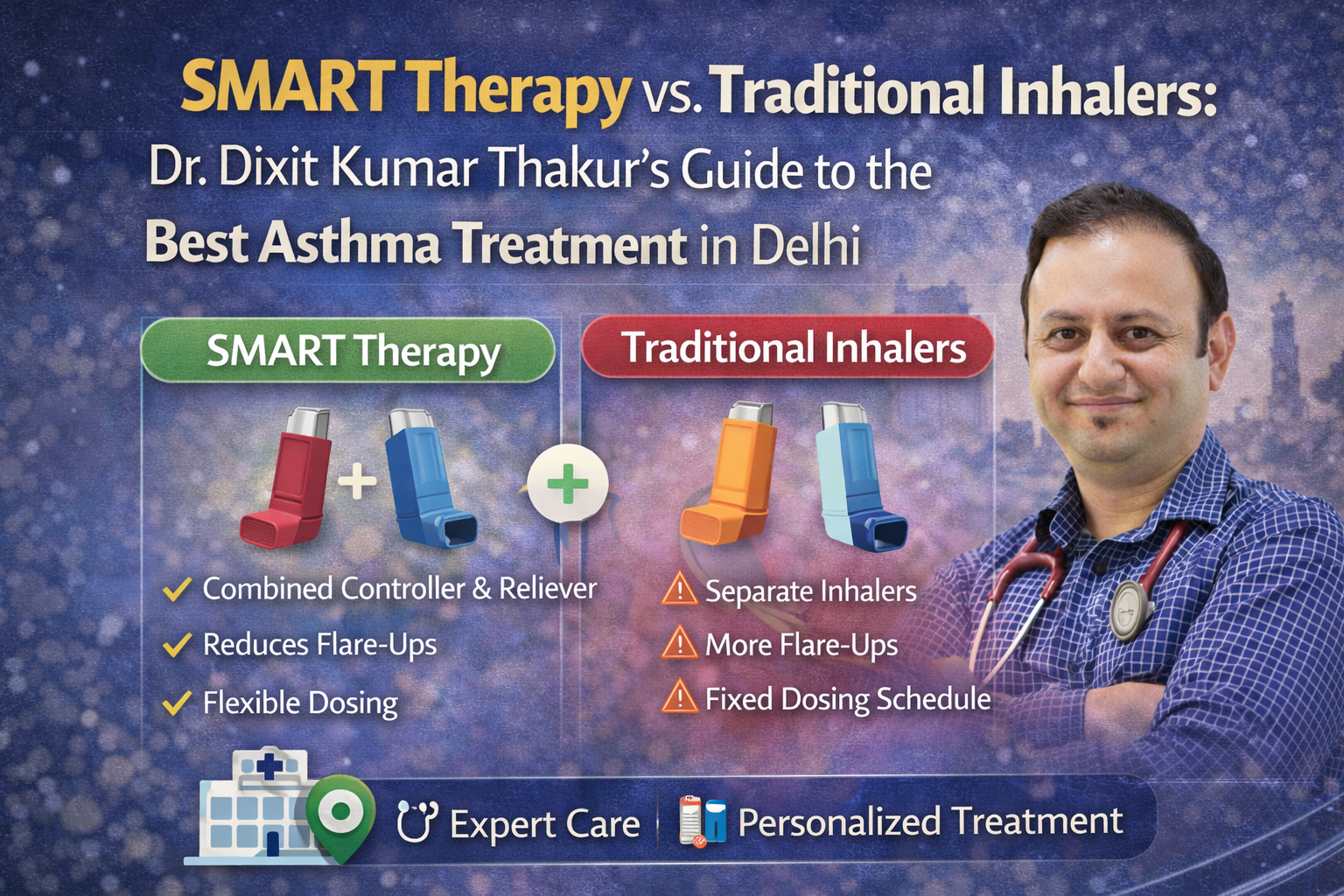
Question 4: Is My Asthma Being Managed as Well as It Could Be?
Asthma is one of those conditions that patients frequently underestimate over time. They have had it for years. They use their inhaler when they need it. They assume that if they are getting by, their asthma is under control. But getting by and being well-controlled are two very different things — and the difference matters enormously for long-term lung health.
Dr. Dixit Kumar Thakur at Pulmovista Clinics takes a thorough approach to asthma review. He assesses symptom frequency, reliever inhaler use, night-time waking due to asthma, exercise tolerance, and the impact of asthma on daily life. He reviews inhaler technique — because incorrect technique is one of the most common and most correctable reasons for poor asthma control — and evaluates whether the current medication combination is the most appropriate for the patient’s level of disease.
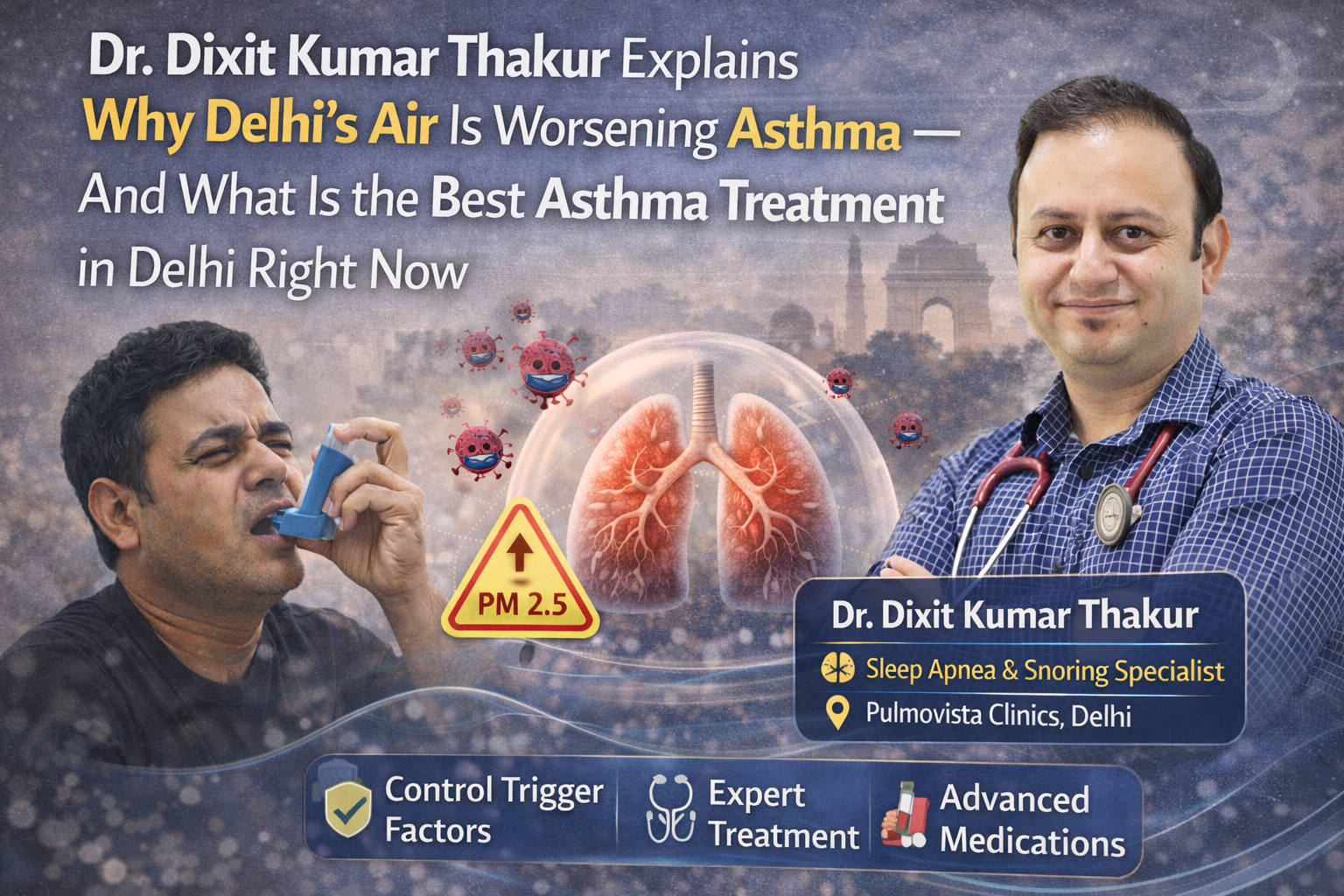
For patients whose asthma is driven or worsened by nasal allergy — which is extremely common in Delhi’s pollution-heavy environment — addressing the allergy is frequently the missing piece that brings asthma under genuine control. Asking this question opens a conversation that could significantly change the quality of your daily life, your exercise capacity, and your long-term respiratory health.
Question 5: Could My Symptoms Be a Lung Infection and How Serious Is It?
Persistent cough, breathlessness, chest heaviness, fever, and fatigue that linger beyond what a typical cold or flu should produce are symptoms that need professional evaluation — not another week of home remedies and over-the-counter medications.
Lung infection treatment in Delhi requires specialist assessment because not all lung infections are straightforward. Pneumonia, bronchitis, atypical infections, and tuberculosis — which remains a significant public health concern in Delhi — all present differently and require different treatments. Delaying proper diagnosis and treatment of a lung infection carries real risks, including progression to more serious disease, complications in patients with underlying asthma or COPD, and in vulnerable individuals, life-threatening deterioration.
Dr. Dixit Kumar Thakur at Pulmovista Clinics evaluates lung infection presentations with the full toolkit of a respiratory specialist — clinical examination, chest imaging, sputum analysis, and where relevant, specialised testing for atypical or resistant organisms. Asking this question clearly and early in your appointment ensures that nothing is missed and that treatment begins without unnecessary delay.
Question 6: Could My Nasal Allergy Be Making My Breathing and Sleep Worse?
This question surprises many patients — they have never connected their blocked nose to their snoring, their asthma, or their disrupted sleep. But the connection is direct, well established, and clinically significant.
In Delhi, where the allergen burden is among the highest in the country year-round, chronic allergic rhinitis is extraordinarily common. When the nasal passages are permanently swollen and congested, the consequences ripple through the entire respiratory system. Nighttime breathing shifts to the mouth, increasing airway instability and snoring. Postnasal drip irritates the airways, triggering asthma symptoms. Chronic nasal inflammation drives systemic airway reactivity that makes both asthma and sleep apnea harder to control.
As the best allergy doctor in South Delhi, Dr. Dixit Kumar Thakur at Pulmovista Clinics is uniquely placed to evaluate and treat this upstream driver of respiratory disease. Allergy testing identifies specific triggers. Targeted treatment — intranasal corticosteroids, antihistamines, allergen avoidance strategies, and where appropriate, allergen immunotherapy — addresses the root cause rather than just managing downstream symptoms.
Patients who ask this question at their Pulmovista Clinics appointment frequently discover that treating their allergy is the single most impactful intervention for their overall respiratory health.
Question 7: How Do I Monitor My Condition and When Should I Come Back?
This final question is one that patients rarely ask — and one that makes an enormous difference to long-term outcomes. A single clinic appointment, however thorough, is not a complete treatment plan. Respiratory conditions — asthma, sleep apnea, recurrent lung infections, chronic allergy — all require ongoing monitoring, periodic review, and adjustment of treatment as the patient’s condition and circumstances evolve.
Dr. Dixit Kumar Thakur at Pulmovista Clinics believes that the relationship between patient and doctor is a continuing one, not a transactional encounter. He provides every patient with clear guidance on what to monitor at home — symptom patterns, reliever inhaler use, sleep quality, energy levels — and when to return for review.
For asthma patients, regular lung function testing tracks whether control is improving or deteriorating. For sleep apnea patients on CPAP, follow-up appointments assess therapy compliance, comfort, and effectiveness. For allergy patients, seasonal reviews ensure that treatment is adjusted to match changing allergen exposure across Delhi’s variable climate. For patients recovering from lung infections, follow-up imaging and clinical review confirm resolution and identify any complications early.
Asking this question ensures that you leave Pulmovista Clinics not just with a diagnosis and a prescription, but with a clear, personalised plan for managing your health over time — with Dr. Thakur as your ongoing specialist partner in that process.
Why Pulmovista Clinics Is the Right Place for These Conversations
The questions in this article share something important — they are not simple questions with simple answers. They require a doctor who has the time, the expertise, and the genuine interest in the patient to answer them properly.
Dr. Dixit Kumar Thakur has built Pulmovista Clinics around exactly this kind of care. Whether you are coming in with snoring that has never been properly evaluated, asthma that has never quite been under control, a lung infection that is not clearing as it should, or a combination of respiratory symptoms that nobody has ever fully connected — you will find a specialist who listens, investigates thoroughly, explains clearly, and treats with precision.
Pulmovista Clinics is not just a snoring and sleep disorder clinic. It is a complete respiratory care centre where pulmonology, sleep medicine, and allergy expertise come together under one roof — and where every patient leaves with more answers, more confidence, and better care than they arrived with.
Book Your Consultation Today
Come prepared. Come with your questions. And come knowing that at Pulmovista Clinics, Dr. Dixit Kumar Thakur will give every single one of them the thorough, honest, expert answer it deserves.
Book your appointment today — because the right conversation with the right specialist can change the entire direction of your health.
FAQs-Sleep Apnea Treatment Near Me, Asthma Medications & Lung Infection Treatment in Delhi
- What questions should I ask about sleep apnea treatment near me?
You should ask about diagnosis methods, severity levels, CPAP therapy, and lifestyle changes. At Pulmovista Clinics, Dr. Dixit Kumar Thakur provides personalized sleep apnea treatment plans.
- Which asthma medications are best for long-term control?
Common asthma medications include inhalers (bronchodilators and corticosteroids). The right treatment depends on your condition, and a pulmonologist can guide you with the best options.
- When should I seek lung infection treatment in Delhi?
If you experience persistent cough, fever, chest pain, or breathing difficulty, consult a specialist immediately for lung infection treatment in Delhi to avoid complications.
- How does a snoring and sleep disorder clinic help?
A snoring and sleep disorder clinic offers sleep studies, diagnosis, and treatment options like CPAP therapy to manage snoring and sleep apnea effectively.
- Can untreated snoring lead to serious health issues?
Yes, chronic snoring can be a sign of sleep apnea, which may increase the risk of heart disease, high blood pressure, and fatigue.
- How are asthma and sleep apnea connected?
Asthma can worsen at night and may increase the risk of sleep apnea. Proper asthma medications and monitoring can help manage both conditions.